
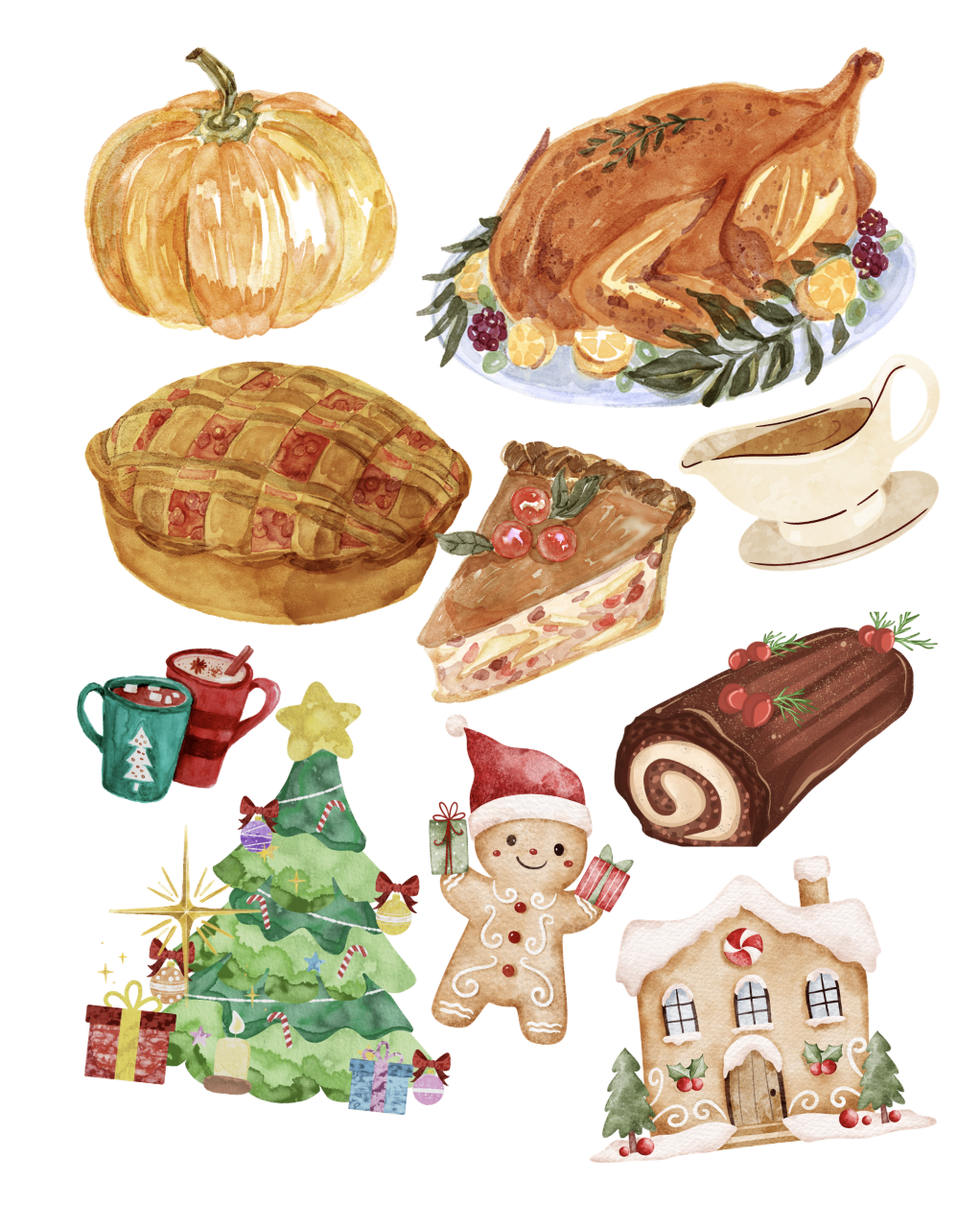
Picture this: It’s early November, and your feed is already flooded with aesthetic candles (probably apple or cinnamon scented), perfectly styled mantels, and that one friend who’s already posted their #CozyVibes holiday posts. The stores have been playing Mariah Carey since Halloween ended, and somehow, you’re already three items deep in a cart labeled “Holiday Essentials.”
Somewhere between gratitude and glitter, our holidays became moodboards. But it wasn’t always like this.
Were holidays always this aesthetic, this curated, this… marketable? Let’s trace the thread backward and see how we got here—from harvest festivals to marketing campaigns.
Back Then: Rituals, Not Retail
Rewind a few centuries, and the holidays looked nothing like our Instagram stories. Early Thanksgiving was a modest three-day harvest celebration focused on gratitude for survival, not the perfect gravy boat.
And Christmas celebrations, in fact, were banned in parts of colonial America, as they were viewed as too indulgent.
These weren’t occasions for aesthetic excellence. They were survival markers, religious observances, community rituals. Families gathered because it felt necessary—a way to mark the turning of seasons and share what little abundance existed.
Once upon a time, the season simply meant sharing warmth in cold months—we still have this sense today, but most of it is translated into our shopping carts.
The Turning Point: Industry Meets Tradition
The world saw the Industrial Revolution, and everything changed.
Suddenly, goods could be produced on a large scale. Department stores, such as Macy’s, emerged as cathedrals of consumption, pioneering popular holiday ‘traditions’ as we see today, as well as holiday window displays (Have you ever wondered where ‘window shopping’ came from?).
By the late 1800s, retailers had learned a powerful lesson: holidays were profitable. Then, marketing strategies shifted focus to creating the right imagery and evoking the right feeling, so that people would join the craze by purchasing trendy holiday items.
Coca-Cola’s 1930s Santa Claus campaign is the poster child for this trend. They gave us the red-suited, rosy-cheeked, utterly jolly figure we all recognize today—conveniently matching their brand colors. It wasn’t just advertising; it was cultural engineering.
Retail learned to predict joy, and then package it. Christmas trees went from a niche German tradition to an American staple. Thanksgiving has developed a visual language: the golden turkey, the cornucopia, and the perfectly set table. Each image carefully cultivated to evoke emotion—and consumers’ open wallets.
Media Made the Mood
If industry planted the seeds, mass media watered them into full bloom.
Hollywood gave us It’s a Wonderful Life and Miracle on 34th Street—films that created a visual and emotional script for what holidays should feel like. These images seeped into the cultural consciousness until they became indistinguishable from tradition itself.
Then came Hallmark, Pinterest, and Instagram. The “visual script” of holidays became standardized and democratized. Now, everyone could—and was expected to—recreate those cinematic scenes at home. Nostalgia became motivation to buy. Aesthetics became emotional triggers. And suddenly, the holidays had a filter: brown and earthy for Thanksgiving, and glittering red and green for Christmas.
Today: The Algorithm of Celebration
Now, every November through December operates like a synchronized marketing machine.
Brands, influencers, and your local grocery store all run on the same “holiday content rhythm.” Starbucks drops the red and green cups. Target rolls out its holiday collection. Beauty retailers aggressively advertise Advent Calendars. Of course, you’re about to see your favorite creator post a sponsored gift guide. Even the game companies rushed into the holiday season with their seasonal editions or limited deals.
But here’s the thing: buying has become a way of participating in the culture. Have you ever put down perfectly looking home essentials during this season because they were not holiday-branded? Or, have you ever settled with a 20% price markup because… ’tis the season? No worries, I’m with you. When we grab that seasonal candle or put up those string lights, we’re not just consuming—we’re signaling belonging. We’re saying, “I’m part of this too.”
We don’t just celebrate holidays anymore. We produce them. We direct, style, photograph, caption, and share them. And the line between genuine tradition and curated trend has blurred until it’s nearly invisible.
The Reflection
So here we are today: glittering trees, golden turkeys, aesthetically perfect moments shared across millions of screens.
We didn’t lose the holidays to commercialization—we transformed them. What once was intimate became public. What was sacred became shareable. What was simple became styled.
And maybe that’s not entirely a tragedy. Because even in the performance, even in the curation, there’s still a seed of that original impulse: the need to gather, to mark time, to feel part of something bigger. We still want warmth in the cold months. We still crave connection. We just express it differently now—through matching mugs instead of shared harvests, through mentions in stories and hashtags instead of hymns.
Maybe our glittering trees and golden turkeys say less about extravagance, and more about our need to belong—to see ourselves in the same light as everyone else, just for a season.
And perhaps, this year, you can start a new tradition of giving, once again celebrating the sense of community, gathering, and kindness in this season.
Stay warm, and Happy Holidays!


